
Why Low-Density Communities Offer Better Long-Term Living
A home is experienced differently once the excitement of purchase fades. Over time, privacy, space, movement and everyday comfort often matter more than apartment size or the number of amenities.
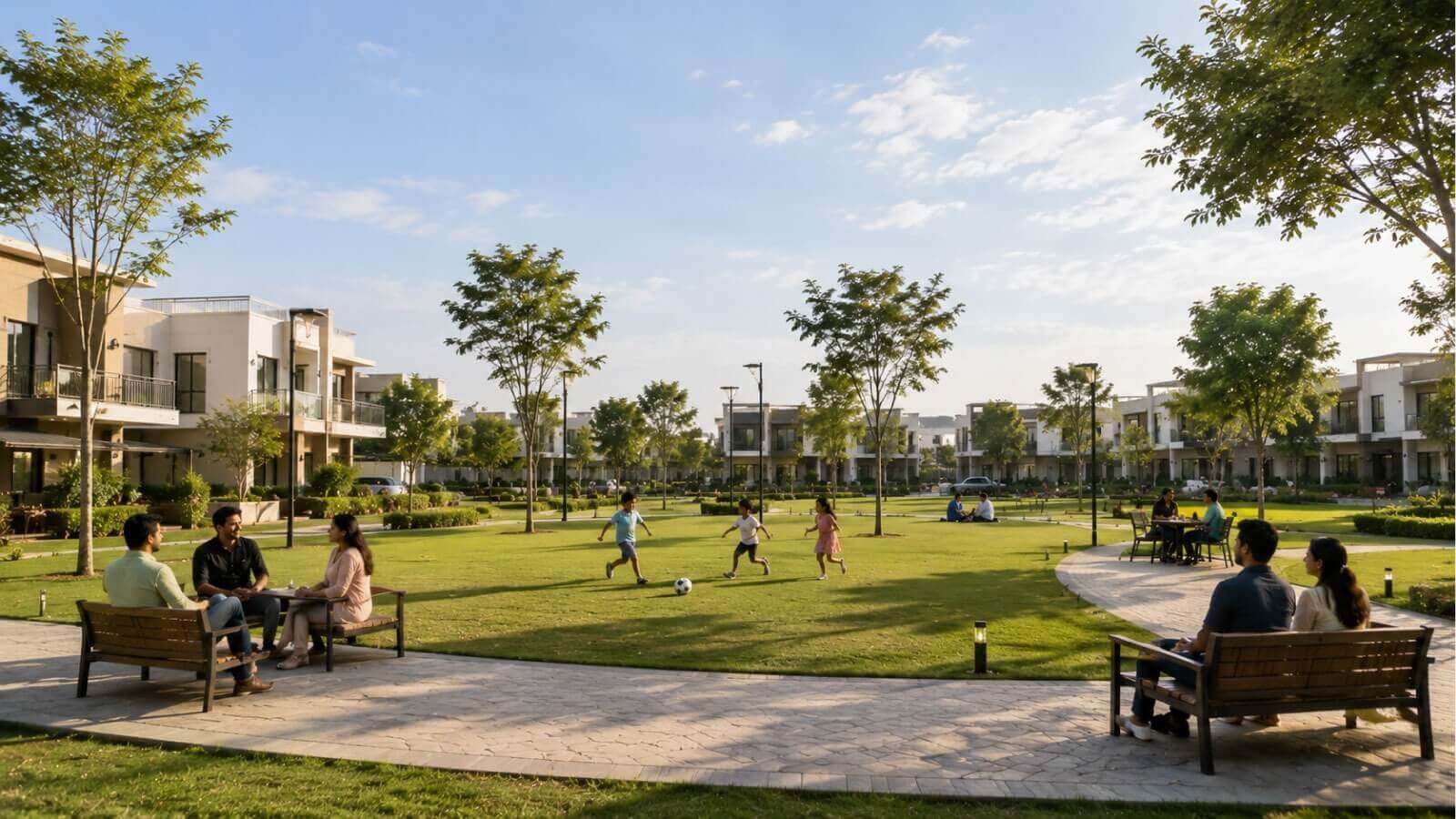
This is where low-density communities can offer an advantage. Fewer homes within a development can create greater breathing room, better separation and a more relaxed residential environment, provided the project is thoughtfully planned.
For buyers considering apartments in Haridwar or Rishikesh, this distinction is particularly relevant. In a region where the Ganga, spiritual landmarks and natural surroundings shape the lifestyle proposition, the balance between built-up and open space can influence how a community feels over the long term.
What Does Low-Density Living Actually Mean?
Low-density living is not simply about having fewer buildings. In residential development, density relates to the number of homes accommodated on a given land parcel and how buildings, open areas, amenities, parking and circulation are organised.
A lower-density community can provide greater scope for:
- Landscaped and open areas
- Recreational spaces
- Parking and internal circulation
- Community amenities
- Building setbacks
- Private and semi-private spaces
The important consideration is not the number alone, but how effectively the available space is planned and experienced.
Why Low-Density Communities Can Deliver Better Long-Term Living
1. More Space Between Home and Neighbourhood
Space influences how a community feels on a daily basis. When towers, homes and amenities are not tightly packed, residents can experience clearer separation between private and shared areas.
Landscaped zones, pathways and setbacks can provide visual relief while reducing the sense of constant crowding. For families planning to stay for years, this everyday comfort can prove more valuable than an extensive but underused amenity list.
2. Privacy Becomes Part of the Design
Privacy is not merely an apartment feature; it is also a planning outcome.
Lower residential density can allow greater separation between homes, balconies, circulation areas and common spaces. This creates layers of privacy around the residence rather than limiting privacy to the apartment itself.
For families, retirees and second-home owners, that distinction can make a community feel more residential and less congested.
3. Open Spaces Become More Meaningful
The value of open space depends on how easily residents can use it. A landscaped area that is difficult to access or surrounded by dense construction may contribute less to everyday liveability than a smaller, well-integrated green space.
The Government of India's AMRUT programme recognises parks and green spaces as important elements of urban infrastructure and quality of life. WHO research has also associated accessible urban green spaces with physical activity, stress reduction, social interaction and broader well-being.
For buyers, therefore, the question should not simply be how much open space a project claims, but how that space functions within the community.
4. A Quieter Residential Experience
Fewer homes can potentially support a calmer environment, particularly when traffic, parking and internal circulation are carefully planned.
However, low density does not automatically guarantee tranquillity. Road exposure, surrounding commercial activity, construction quality and community management can influence the actual experience.
For buyers looking at homes near Har Ki Pauri, Haridwar or Rishikesh, the internal planning of a project deserves as much attention as its external surroundings.
5. Better Everyday Usability
Long-term liveability is often determined by small, recurring experiences. Residents notice whether lifts become crowded, parking remains manageable, children have usable outdoor areas and common spaces remain comfortable during peak periods.
A smaller resident population can reduce pressure on shared facilities, although the outcome ultimately depends on the project's design, maintenance and infrastructure capacity.
Low Density vs High Density: What Should Buyers Compare?
The choice is not simply between low density and high density. Higher-density developments can make efficient use of land and infrastructure when supported by appropriate planning.
The better question is whether the project's infrastructure, open space and common facilities are proportionate to the number of residents they serve.
| Factor | Lower-Density Community | Higher-Density Community |
|---|---|---|
| Privacy | Generally more scope for separation | Depends heavily on planning |
| Open space | Potentially more generous | Can be more constrained |
| Common-area usage | Potentially less crowded | May experience greater demand |
| Internal movement | Can feel more relaxed | Requires efficient circulation |
| Community scale | More intimate | Larger and more active |
| Long-term comfort | Strong when planning is thoughtful | Strong when infrastructure matches density |
Density, therefore, should be evaluated alongside design quality, infrastructure and management, rather than treated as a standalone advantage.
Why This Matters for Apartments in Haridwar and Rishikesh
Haridwar and Rishikesh attract different types of homebuyers, including permanent residents, retirees, second-home owners and buyers seeking closer access to spiritual and natural surroundings.
That makes the residential environment an important part of the purchase decision. Buyers exploring flats near Har Ki Pauri or homes along the Haridwar–Rishikesh corridor should assess:
- Number of homes within the project
- Land area relative to the number of residences
- Open and landscaped areas
- Building spacing and orientation
- Parking provision
- Lift-to-home ratio
- Pedestrian movement
- Quality and maintenance of common areas
- Connectivity to everyday conveniences
- Approvals, RERA registration and developer credentials
This provides a more realistic assessment of liveability than relying on a brochure's amenity count.
What Investors Should Understand About Low-Density Communities
For investors, low density should be viewed as a differentiating characteristic, not a guaranteed investment advantage.
Location, legal due diligence, construction quality, developer track record, demand, maintenance costs, rental prospects and resale liquidity remain fundamental to an investment assessment.
A well-planned, lower-density development may stand apart in a competitive residential market, but differentiation alone does not guarantee appreciation or rental returns.
The choice of a real estate developer is equally important. Planning quality, delivery record, documentation and after-sales management can influence the asset's performance and ownership experience long after possession.
Conclusion
The strongest residential communities are designed for life after possession, not simply for launch day.
Low-density planning can create greater scope for privacy, usable open space, smoother movement and comfortable shared facilities. Its success, however, depends on thoughtful design, adequate infrastructure, credible development and consistent maintenance.
For buyers exploring homes in Haridwar and Rishikesh, the evaluation should therefore extend beyond apartment size and amenities. Consider how many residents a community is designed to accommodate, how its space is distributed and whether its planning supports the lifestyle you expect to maintain for years.
In a region where the Ganga, spirituality and access to nature are central to the appeal of homeownership, space itself can become part of the luxury equation.
Frequently Asked Questions
Is low-density living always better?
No. Lower density can support privacy and open space, but liveability also depends on design, infrastructure, location, connectivity and maintenance.
What is the biggest advantage of a low-density residential project?
The key advantage is the potential for a less crowded environment, with greater scope for privacy, open areas and comfortable use of shared facilities.
Is low-density living suitable for families?
It can be, particularly for families that value privacy, open spaces and a quieter community environment. Buyers should still assess schools, healthcare, connectivity, security and everyday conveniences.
Should investors prefer low-density projects?
Not automatically. Investors should assess location, legal approvals, developer credibility, demand, pricing, rental prospects and resale liquidity alongside density.


