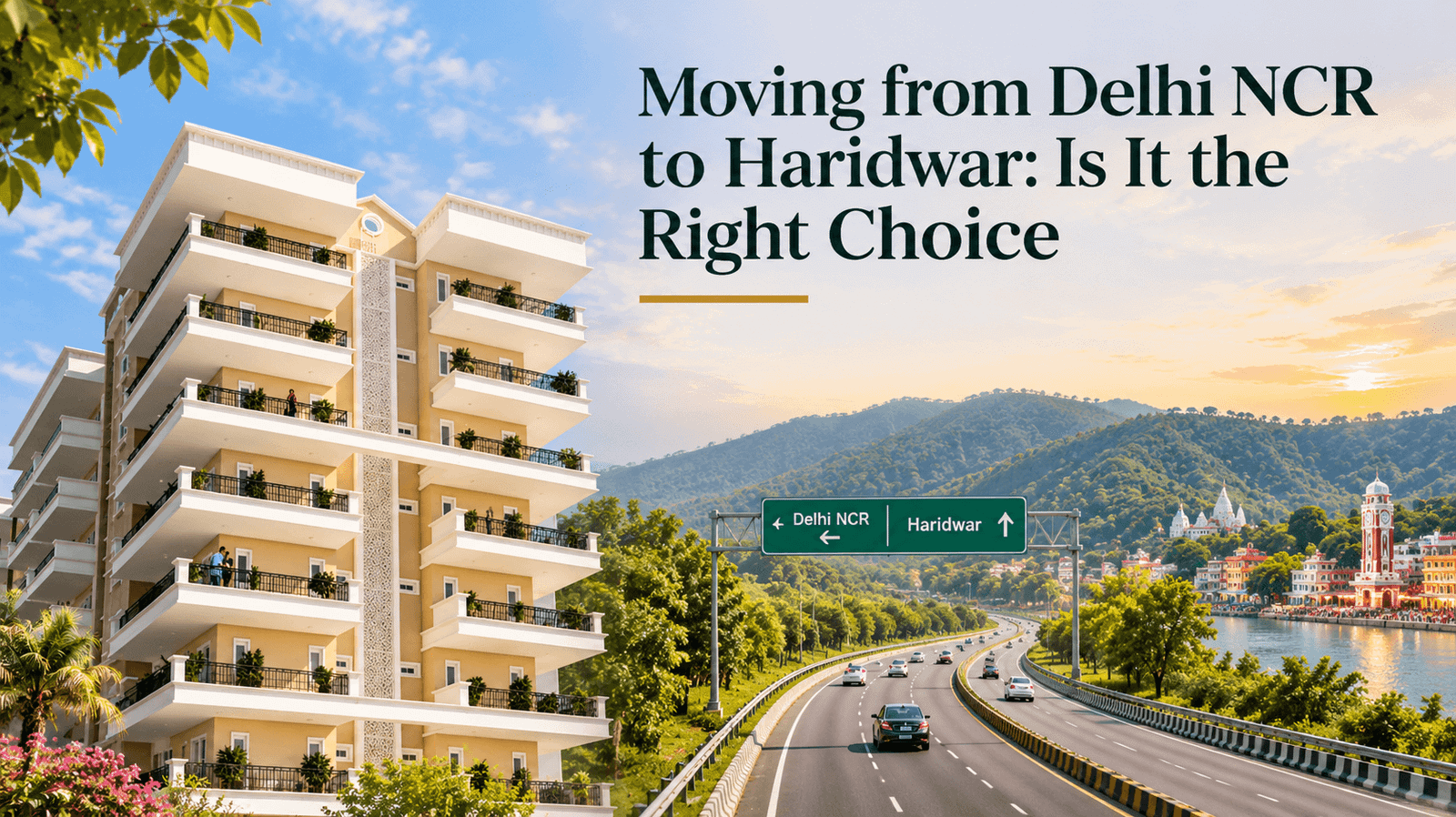
Moving from Delhi NCR to Haridwar: Is It the Right Choice?
Haridwar has long been known as a place of pilgrimage. Increasingly, it is also a place to put down roots. With a working industrial base, established schools and colleges, reliable healthcare and strong road and rail links, the city offers homebuyers something metropolitan living often cannot: room to breathe, without cutting ties with the cities they know.
For families and professionals in Delhi NCR, the appeal is clear, but so are the trade-offs. A move of this kind rewards careful thought about work, schooling, health and housing. As a Haridwar-based developer, we have seen what makes the city work for homebuyers, and where it asks for compromise. Here is an honest account of both.
Why Haridwar is Emerging as a Residential Destination
The city's residential case rests on more than its spiritual identity. Its character, its economy and its position at the edge of the Shivalik foothills each contribute.
- A Different Pace of Life: Daily routines here are less hurried than in the large metros.
- An Industrial Base: SIDCUL's Integrated Industrial Estate and BHEL anchor a long-established manufacturing economy.
- Cultural Depth: The Ganga, the temples and the ashrams shape everyday life, not just festival days.
- Nature at the Doorstep: Rajaji National Park and the foothills are close at hand.
- Regional Links: Road and rail connect the city to Delhi, Uttar Pradesh, Haryana and the rest of Uttarakhand.
Together, these qualities make Haridwar relevant to families, remote professionals, retirees and those looking for a second home in Uttarakhand.
Living Here: Culture, Nature and Pace
Life in Haridwar keeps time with the river. The evening Ganga Aarti at Har Ki Pauri, the temple bells and the rhythm of the ashrams give the city a character that few urban centres can match. For those who value spiritual and cultural traditions, this is part of the daily backdrop rather than an occasional visit.
The city is also compact. Local markets, familiar faces and a community-minded atmosphere offer a gentler alternative to the scale of Delhi NCR, while Rishikesh and the wider hills are within easy reach for weekend breaks.
Experience, however, varies by neighbourhood. Established residential colonies, industrial belts and busy pilgrimage routes feel very different from one another, so the choice of location matters more than the city's reputation.
Connectivity
Connectivity is among Haridwar's strongest practical advantages, particularly for those who still travel often to Delhi or elsewhere.
- Road: Regular bus services and private transport link the city with Delhi, Haryana, Uttar Pradesh and the rest of Uttarakhand.
- Rail: Haridwar Junction offers direct connections to cities including Delhi, Mumbai, Jaipur and Kolkata.
- Air: Jolly Grant Airport in Dehradun, roughly 37 kilometres away according to district administration information, is the nearest domestic airport.
The Delhi-Dehradun Economic Corridor is intended to improve regional access further. Travellers should check its operational status and road conditions before planning a journey.
For residents who do not need to commute to Delhi daily, these links make Haridwar a practical base.
Work and the Local Economy
Haridwar's economy extends beyond its pilgrim trade. SIDCUL and BHEL support manufacturing, engineering and operations, while tourism, hospitality, education, healthcare and retail add further depth.
The city suits professionals in industrial sectors, entrepreneurs running regional businesses, and remote workers or consultants whose work is not tied to a metropolitan office.
The picture is different for those whose careers depend on corporate offices in Gurugram, Noida or Delhi. Haridwar's corporate job market is narrower than that of the NCR, so commuting needs should be weighed carefully before any decision is made.
Healthcare and Education
For families planning to settle, hospitals and schools often decide the matter.
Healthcare: Haridwar has local hospitals, and AIIMS Rishikesh provides tertiary care within the region. Families should still check how far a home is from emergency services, whether the necessary specialists are available, and how long it takes to reach larger institutions. Those who need frequent specialised treatment should confirm availability before moving.
Education: The district has schools, colleges and higher education institutions, among them IIT Roorkee and Gurukul Kangri. Parents should compare schools on curriculum, transport, extracurricular activities and distance from the proposed home.
Daily Needs: Markets, pharmacies, banks and public transport shape day-to-day convenience. These are best judged around the specific property rather than the city as a whole.
Choosing the Right Home
Once the city feels right, the next question is the home itself. Haridwar's residential market spans a range of locations, configurations and price points, and no two developments offer the same advantages.
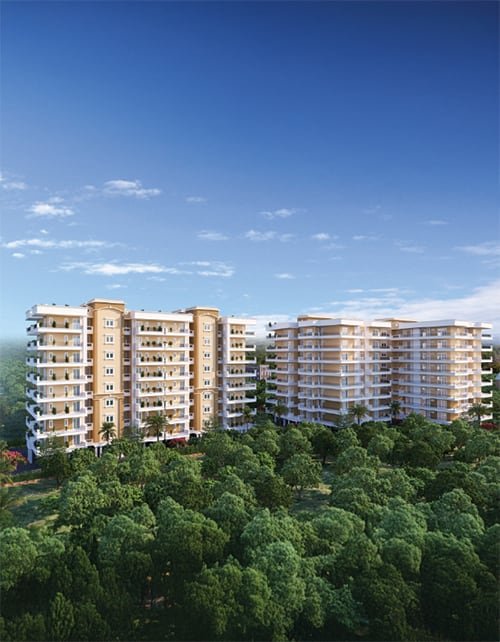
A well-planned apartment community can offer managed security and parking, landscaped and recreational spaces where provided, 1, 2 and 3 BHK configurations to suit different households, and shared maintenance that spares owners the burden of upkeep.
Before committing, buyers should verify the following:
| Factor | What to Evaluate |
|---|---|
| Location | Access to schools, hospitals and markets |
| Legal Approvals | Applicable permissions and RERA registration |
| Construction | Quality, specifications and workmanship |
| Connectivity | Road access and public transport |
| Amenities | Facilities actually included in the project |
| Maintenance | Charges and management arrangements |
| Total Cost | Registration, taxes and additional expenses |
At ETH Infra, our projects include Emerald Riviera and Haridwar One. We encourage buyers to visit in person, compare layouts and specifications, and confirm current availability directly with us before proceeding.
Who Should Consider the Move
- Families seeking a calmer environment will find Haridwar rewarding, provided schools, healthcare and daily conveniences are close to their chosen home.
- Working professionals such as remote employees, freelancers and consultants can relocate most easily when their work does not require a fixed metropolitan office.
- Retirees may be drawn to the city's spiritual and cultural setting. Lifts, security, and proximity to healthcare and essential services should come first.
- Second-home buyers looking for an Uttarakhand base for extended stays should weigh maintenance, security and ease of travel.
What to Weigh Before Relocating
Haridwar is not without its limitations, and it is better to know them in advance.
- Employment: The corporate job market is less diverse than in Delhi NCR.
- Specialised Care: Some treatments may mean travelling to Rishikesh, Dehradun or Delhi.
- Lifestyle: Shopping, nightlife and large entertainment venues do not match what the metros offer.
- Congestion: Major religious events and pilgrimage seasons can strain traffic and parking.
- Environment: Air quality, water supply, drainage and noise levels vary by neighbourhood.
The Verdict
Moving from Delhi NCR to Haridwar makes sense when the city's strengths match your priorities: an established industrial base, solid educational and healthcare institutions, good rail links and a distinctive cultural setting. It is a place to live, not merely to visit.
The right decision ultimately rests on your work, your family's needs, your preferred way of life and your finances. Once those are settled, the choice of neighbourhood and development becomes just as important. Exploring luxury apartments in Haridwar and other well-planned residences is a sensible way to begin.
ETH Infra develops residential projects across Haridwar and the wider Uttarakhand region. Visit our developments, see the locations for yourself and review the specifications. It is a good first step towards finding a home that suits you.
Frequently Asked Questions
1. Is Haridwar a good place to move to from Delhi NCR?
It can be, particularly for families, remote professionals and retirees seeking a different pace of life. Employment, healthcare, education and personal priorities should guide the decision.
2. How far is Haridwar from Delhi?
Roughly 200-220 kilometres by road, depending on the starting point and route.
3. Is Haridwar suitable for families?
Yes. The city has schools, healthcare facilities, established residential areas and everyday conveniences. Families should check what is available near their preferred location.
4. Are there employment opportunities in Haridwar?
Yes. SIDCUL and BHEL anchor the industrial sector, and tourism, hospitality, education, healthcare and local businesses provide further opportunities.
5. Is buying an apartment in Haridwar a good decision?
It can be a practical choice for permanent residence or extended stays. Location, developer credibility, legal approvals, construction quality and total cost should guide the decision.