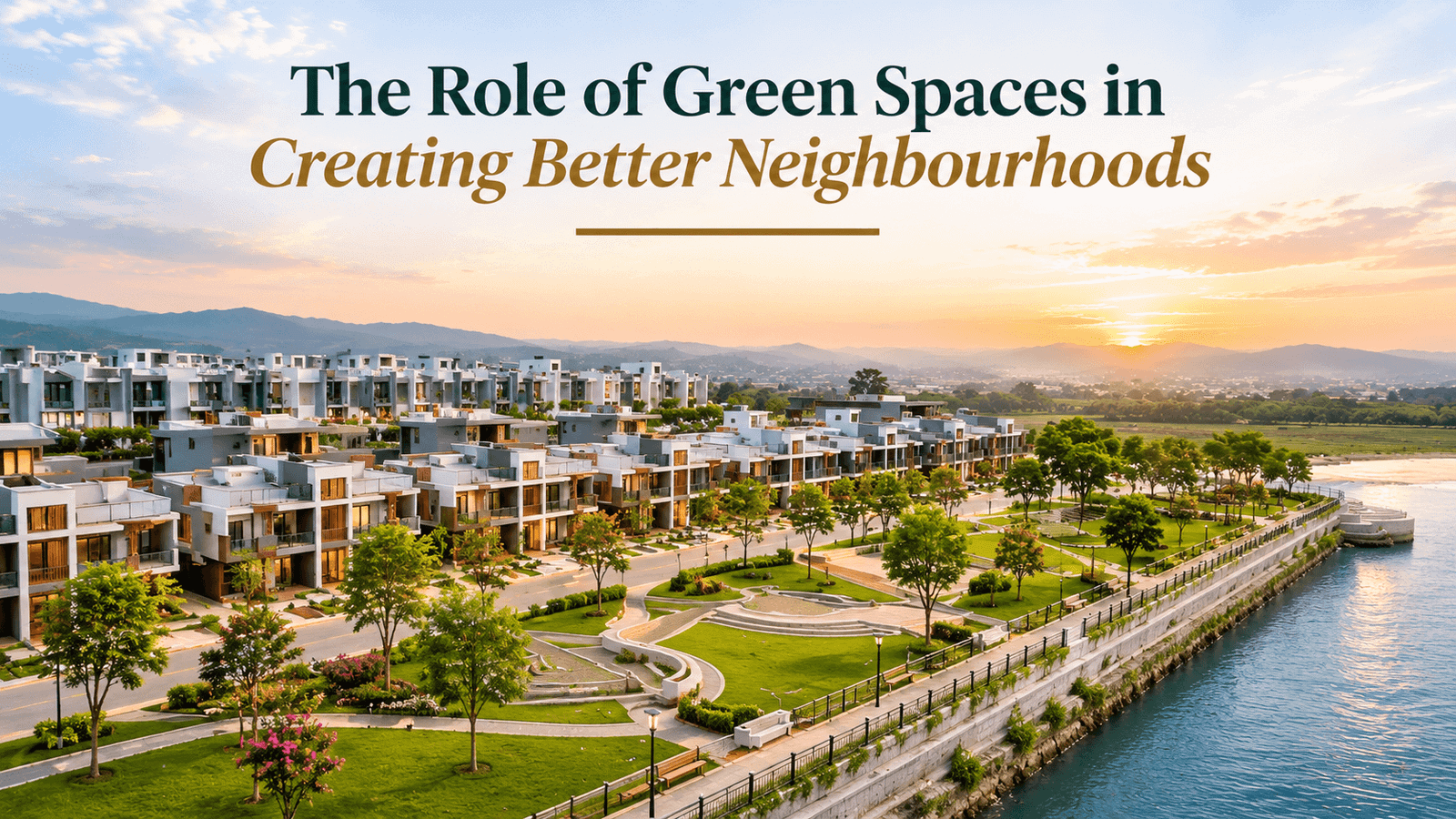
The Role of Green Spaces in Creating Better Neighbourhoods
A good neighbourhood is more than well-designed homes and sound connectivity. The environment around the home shapes how comfortable everyday life feels. Parks, landscaped gardens, tree-lined streets and open spaces make residential areas more liveable and give neighbours a reason to step outdoors.
As Indian cities grow denser, green space has moved from a finishing touch to a planning priority. That matters in Haridwar, a city defined by the Ganga and the Himalayan foothills. A natural setting alone does not make a neighbourhood good. What counts is how well each development brings greenery, open space and recreation into daily life.
What Counts as a Green Space?
Green spaces are natural or landscaped areas within a residential setting that support recreation, relaxation and social interaction. They include:
- Public Parks: For walking, exercise and rest.
- Community Gardens: Shared landscaped areas for neighbours to meet.
- Tree-Lined Streets: Shaded roads and pathways.
- Residential landscaping: Gardens, lawns and planting within housing developments.
- Playgrounds: Safe outdoor spaces for children.
- Green Buffers: Planted areas that separate homes from roads or other land uses.
What matters is that these spaces are accessible, usable and well maintained, not merely decorative.
7 Ways Green Spaces Make Better Neighbourhoods
1. They Make Healthy Habits Easier
When a park is a few minutes away, a morning walk, a jog or a yoga session needs no planning. Children get room to play and senior citizens a safe place to stay active. The World Health Organization’s report Urban Green Spaces and Health identifies physical activity, psychological relaxation and social interaction among the benefits of urban greenery.
2. They Offer a Pause From Busy Lives
Long working hours and daily traffic leave little time outdoors. A garden or a shaded bench within the neighbourhood gives residents a place to unwind close to home. For buyers, this makes greenery a question of well-being rather than aesthetics.
3. They Improve the Local Environment
Vegetation works quietly in the background:
- Temperature: Trees provide shade and cool surfaces.
- Rainwater: Planted areas absorb rainfall and slow runoff.
- Air Quality: Foliage can capture certain airborne particles.
- Biodiversity: Native plants support birds and insects.
- Soil: Roots help limit erosion.
4. They Bring Neighbours Together
Walking paths, gardens and common lawns create natural meeting points. In an apartment community, shared landscaped areas offer what private gardens cannot: spaces where residents meet without any household having to maintain them.
5. They Make a Neighbourhood Family-Friendly
Families judge a home by its surroundings as much as by its layout. Well-lit pathways, shaded seating, children’s play areas and landscaped gardens make a community comfortable for every age group.
6. They Lift the Look of the Neighbourhood
Tree-lined roads, landscaped entrances and well-kept gardens soften built-up surroundings and make a development feel welcoming. The best landscaping is also functional, designed to be used and not just admired.
7. They Support Long-Term Appeal
Homes near accessible parks and maintained landscaping tend to attract buyers who value outdoor living. Greenery is one factor among many, however. Location, connectivity, construction quality, infrastructure, developer credibility and market demand all shape property values, and greenery alone guarantees neither appreciation nor rental returns.
Why Green Spaces Matter in Haridwar
Few Indian cities have Haridwar’s relationship with nature. As residential and commercial construction expands, protecting that character becomes part of responsible development. In practice, it means:
- Preserving existing trees and natural vegetation.
- Providing accessible parks and recreational areas.
- Building suitable landscaping into residential projects.
- Maintaining sound drainage and rainwater management.
- Protecting environmentally sensitive areas.
Riverside and nature-oriented sites call for extra care. Buyers should verify land-use permissions, applicable environmental restrictions and whether nearby recreational spaces are genuinely accessible.
Green Spaces and the Future of Residential Development
The Ministry of Housing and Urban Affairs’ URDPFI Guidelines, 2014, recommend 10-12 square metres of open space per person, adapted to local conditions. The figure shows how central open space is to organised urban planning.
For real estate developers, this is both a responsibility and an opportunity. Integrating vegetation, rainwater management and usable recreational areas from the planning stage produces communities that are more sustainable and more pleasant to live in. We approach our own projects with that in mind.
Conclusion
Green spaces make neighbourhoods healthier, calmer and more connected. They encourage activity, ease stress, improve the local environment and give residents a reason to meet. For buyers, they enhance everyday living. For developers, they are a chance to balance modern housing with environmental responsibility, a balance that deserves particular attention as Haridwar grows.
If you are exploring apartments in Haridwar, weigh the surroundings alongside location, connectivity, construction quality and amenities. Explore ETH Infra’s residential developments, including Emerald Riviera and Haridwar One, to see the options available in the city.
Frequently Asked Questions
1. Why are green spaces important in residential neighbourhoods?
They support outdoor activity, relaxation and social interaction, and they improve local environmental conditions and biodiversity.
2. How do green spaces improve quality of life?
They encourage physical activity, ease everyday stress and provide shared areas where residents can meet.
3. Do green spaces increase property value?
They can enhance a home’s appeal, but value also depends on location, connectivity, construction quality, infrastructure and market demand.
4. What green spaces should a residential project include?
Landscaped gardens, walking pathways, children’s play areas, outdoor seating and tree-lined spaces.
5. Why do green spaces matter in Haridwar?
As the city expands, they help balance construction with environmental preservation and keep neighbourhoods liveable.
6. What should buyers check before purchasing in a green development?
Approved layout plans, the accessibility of green areas, landscaping and maintenance arrangements, outdoor amenities and water-management practices.